
The Scale of Pollination's Impact: Summer 2026
 By Dr. Elena Marsh
• July 2, 2026
• 8 min read
By Dr. Elena Marsh
• July 2, 2026
• 8 min read
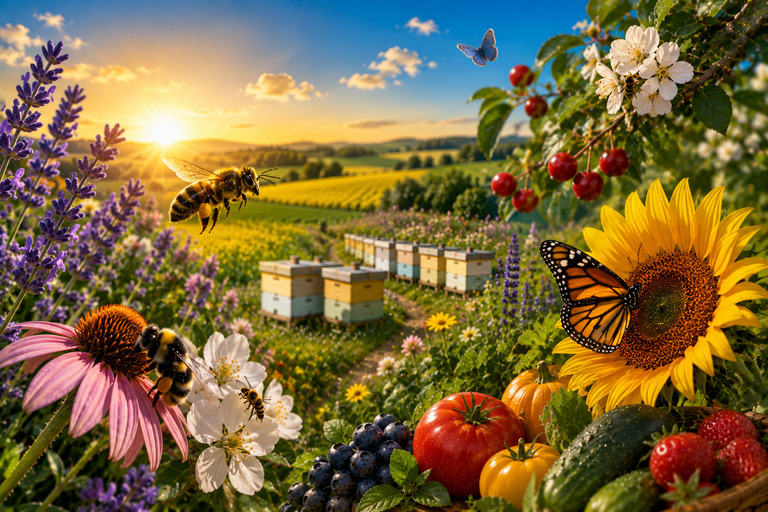
By midsummer, the season's pollination outcomes are largely locked in — and the data paints a picture of both resilience and continued strain.
Every July, the growing season pauses just long enough for beekeepers, growers, and researchers to take stock of what the bloom actually delivered. The 2026 season is no exception. Across three continents, spring bloom windows have closed, early summer crops have set fruit, and the first hard numbers on colony performance are beginning to arrive from cooperating apiaries and extension services. This report from Pollination Network pulls those threads together into a single picture of the scale — and the fragility — of the world's dependence on pollination in the summer of 2026.
Why "Scale" Is the Right Word
It is easy to talk about pollination in the abstract — a bee visiting a flower, a fruit forming. But the honest scale of the system is staggering. Well over a third of global food volume, and closer to three-quarters of the crop species grown for direct human consumption, benefit to some degree from animal pollination. Translating that into a single season means tracking millions of managed colonies moving across hundreds of thousands of hectares in a matter of weeks, timed against bloom windows that can close in a matter of days. As we explored in our guide to crop pollination, this is as much a logistics operation as it is a biological one.
How the Major Crops Fared This Season
Tree Nuts and Orchard Fruit
California's almond bloom in February ran on a compressed schedule this year, with warmer-than-average conditions pulling flowering forward by roughly a week in many blocks. Early yield estimates from grower cooperatives suggest that nut set was broadly on target, though growers who placed hives late relative to the compressed bloom reported patchier results — a reminder that the placement-timeline guidance covered in our crop pollination guide remains as relevant as ever. Apple and pear orchards in the Pacific Northwest and in Central Europe reported a more typical bloom window and generally strong fruit set.
Soft Fruit and Berries
Blueberry growers in the eastern United States and strawberry growers across the UK and northern Spain both reported favourable early-summer conditions. Farms that combined managed honey bee colonies with bumblebee or native bee habitat — the "mixed pollinator" approach we discussed previously — again outperformed those relying on honey bees alone, particularly for fruit uniformity and size grading.
Field and Oilseed Crops
Oilseed rape across Northern Europe had a mixed season, with regional weather variability driving larger-than-usual differences in seed oil content between neighbouring farms. Where bee visitation was strong during the narrow flowering window, growers again saw the 15–25% uplift in seed quality that is now well established in the research literature.
Colony Health: The Underlying Story
Behind every successful bloom sits a colony health picture that beekeepers have been managing carefully all year. Varroa mite pressure remains the single largest driver of winter and spring colony losses reported by commercial beekeepers heading into the 2026 pollination season. Operations that ran structured, monitored treatment programmes going into autumn 2025 entered spring bloom with markedly stronger colonies than those that treated reactively. This is consistent with the broader pattern we've tracked across recent seasons: colony health management in the off-season is now the single biggest lever beekeepers have over their pollination-season outcomes.
Electronic hive monitoring adoption also continued to grow among pollination-service operators this year, giving beekeepers real-time visibility into colony weight and activity across dispersed apiary sites during the busiest weeks of the season — technology we first flagged as an emerging trend in our commercial pollination overview.
Wild Pollinators and Habitat: A Season of Small Wins
Away from managed colonies, citizen science monitoring programmes and habitat restoration projects reported encouraging, if modest, progress this spring and early summer. Wildflower margins established over the past two to three growing seasons — following the establishment methods laid out in our wildflower planting guide — are beginning to mature into genuinely productive forage strips, supporting higher bumblebee and solitary bee counts on the farms that host them. Urban apiaries also had a strong season, with rooftop and community hives in several major cities reporting healthy build-up through the spring, a trend consistent with the community-driven growth described in our urban beekeeping feature.
What This Season Tells Us About the Road Ahead
No single season proves a trend, but summer 2026 reinforces three patterns that have been building for years:
- Timing discipline pays off. As bloom windows compress under warmer spring conditions, the margin for error in hive placement and colony readiness keeps shrinking.
- Off-season colony health is the real pollination-season variable. The strongest bloom outcomes this year traced back to disciplined Varroa management the previous autumn, not to anything done during bloom itself.
- Diversified pollination systems are more resilient. Farms combining managed honey bees, wild pollinator habitat, and — where appropriate — commercially reared bumblebees or solitary bees consistently reported steadier outcomes than single-pollinator systems.
As always, the full picture of the 2026 season won't be complete until harvest data rolls in over the coming months. But the early signals are consistent with what long-term readers of this site will recognise: pollination security is built season over season, through unglamorous, disciplined work — not solved in any single bloom window. For a deeper look at the fundamentals behind all of this, our guides to beekeeping and agriculture and bees remain the best starting points.
Pollination ecologist and contributing writer at Pollination Network, covering the science and economics of managed and wild pollinator systems. Read her full bio →