
Wildflower Planting for Pollinators: Creating Bee-Friendly Habitats
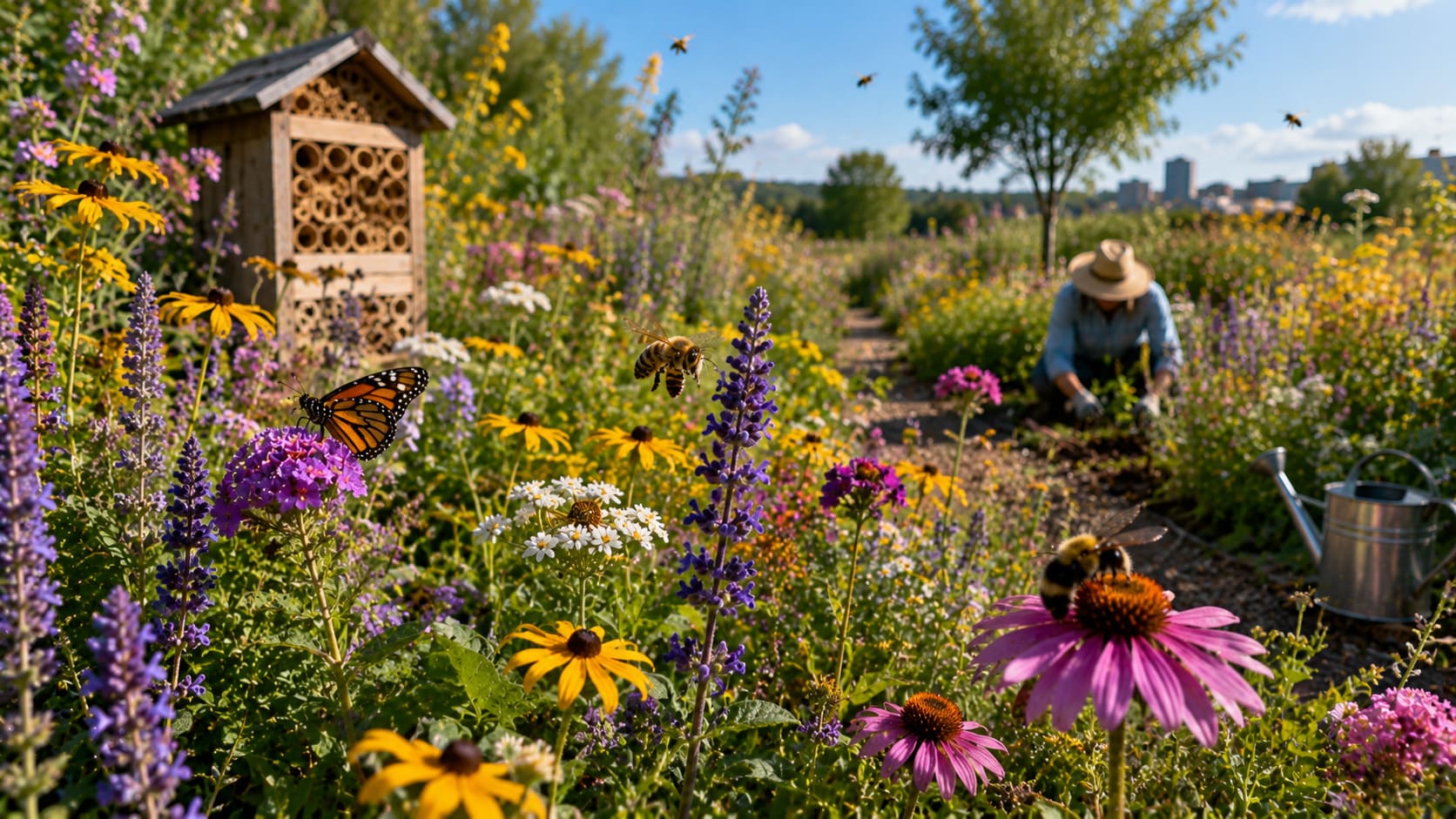
A diverse wildflower meadow provides food, nesting habitat, and shelter for bees and hundreds of other pollinator species.
Planting for pollinators is one of the most effective and accessible conservation actions available to individuals, community groups, land managers, and farmers. While the decline of honey bee populations rightly receives widespread attention, the 250+ species of wild bees native to Britain, the 4,000 species native to North America, and the estimated 20,000 species worldwide are facing even more severe habitat losses. Their recovery depends on the restoration of flower-rich habitats at every scale — from a single window box to a thousand-hectare farm. This guide from Pollination Network provides evidence-based, practical guidance on creating habitats that genuinely support pollinator communities.
Why Habitat Is the Root Cause of Pollinator Decline
The ecological history of pollinator decline in the UK, Europe, and North America is fundamentally a story of habitat loss. In the UK alone, an estimated 97% of flower-rich grassland has been lost since the 1930s — converted to improved pasture, arable land, or built development. In the United States, it is estimated that 150 million acres of natural habitat have been converted to developed land since 1982. The consequences for pollinators dependent on these habitats have been devastating.
Pollinators need three things from their habitat: food (nectar and pollen from flowering plants), nesting sites, and overwintering refuges. Modern intensively managed landscapes fail to provide all three. Agricultural land dominated by a small number of crop species offers brief, concentrated bursts of forage followed by long forage deserts. Regularly mown, herbicide-treated grassland provides nesting habitat for neither ground-nesting bees nor cavity-nesting species. This is the baseline condition that wildflower planting is designed to reverse. Learn more about how this connects to agricultural practices.
Principles of Effective Pollinator Planting
Native Plants First
Native flowering plants are the product of co-evolution between plants and local pollinators over thousands of years. Native flowers provide pollen and nectar in the forms, quantities, and timing that local bee species have evolved to utilise. Many wild bee species show high specialisation — oligolecty — collecting pollen exclusively from one or a few plant genera. For example, the mining bee Andrena fulva is a specialist on willows and sallows; the hairy-footed flower bee Anthophora plumipes relies heavily on Pulmonaria, comfrey, and white deadnettle. Planting diverse native flora supports these specialist species that no amount of exotic garden plants can replace.
This does not mean non-native plants have no value. Many garden plants — especially those in the daisy, borage, and mint families — provide abundant accessible nectar to generalist pollinators and are valuable as supplementary forage, particularly in urban environments where native habitats are scarce.
Season-Long Continuity
A pollinator-friendly planting scheme must provide floral resources from early spring through late autumn. Gaps in the forage calendar — periods of two or more weeks with no flowering species in the vicinity — cause nutritional stress and population crashes in both honey bee colonies and wild bee populations. Key seasonal gaps to fill include:
- Late winter / early spring (February–March): willows, hazel, crocus, winter heather, and snowdrops provide critical early forage for emerging queen bumblebees and early-active solitary bees.
- Early summer gap (late May – June): after the main spring flush, a gap can occur before midsummer species bloom. Phacelia, borage, clover, and cornflowers bridge this gap effectively.
- Late summer / autumn (August–October): ivy, knapweed, marjoram, goldenrod, and asters are critical late-season resources when most garden plants have finished flowering.
Structural Diversity and Nesting Habitat
Around 70% of wild bee species in temperate climates are ground nesters, requiring areas of bare or sparsely vegetated, well-drained, south-facing soil. Retaining such areas within or adjacent to wildflower plantings significantly increases the habitat value for the full diversity of bee species. Cavity-nesting bees (mason bees, leafcutter bees) use hollow plant stems, beetle borings in dead wood, and gaps in masonry. Leaving dead stems of umbellifers (hogweed, fennel, angelica) standing through winter provides critical nesting material.
Wildflower Species: A Practical Guide
Meadow and Grassland Species (UK and Northern Europe)
- Red clover (Trifolium pratense) — outstanding nectar source for bumblebees; fixes atmospheric nitrogen, benefiting adjacent plants.
- Bird’s-foot trefoil (Lotus corniculatus) — low-growing perennial with extraordinary bee-visiting density; valuable for a very wide range of bee species.
- Oxeye daisy (Leucanthemum vulgare) — open-structured flowers accessible to short-tongued bees; long flowering period; easily established.
- Knapweed (Centaurea nigra) — one of the highest-value late summer and autumn plants for bumblebees and butterflies; outstanding in heavy soils.
- Wild marjoram (Origanum vulgare) — superb bee plant flowering July–September on well-drained soils; the most heavily bee-visited native herb in many surveys.
- Field scabious (Knautia arvensis) — elegant mauve flowers from June to October; visited by over 30 bee species including long-tongued bumblebees.
- Viper’s bugloss (Echium vulgare) — vivid blue biennial producing extraordinary quantities of nectar; among the highest-scoring plants in bee nutrition research.
- Musk mallow (Malva moschata) — generous pollen producer for solitary bees; self-seeds freely on disturbed ground.
Garden Plants with High Pollinator Value
- Lavender (Lavandula spp.) — especially effective for honey bees and bumblebees in continental and Mediterranean climates.
- Phacelia (Phacelia tanacetifolia) — annual; extremely high-value nectar producer; widely used as agricultural cover crop and bee forage.
- Borage (Borago officinalis) — annually self-seeding; provides continuous nectar throughout summer; accessible to short-tongued species.
- Catmint (Nepeta spp.) — long-flowering perennial; exceptional for honey bees; easy to establish on well-drained soils.
- Echinacea (Echinacea purpurea) — late-season perennial; high pollen value for solitary bees; combines well with grasses in naturalistic planting schemes.
Establishing a Wildflower Meadow from Scratch
Creating a successful wildflower meadow on existing cultivated or improved agricultural land requires managing the fertility challenge: most wildflower species are adapted to low-fertility soils and are outcompeted by vigorous grass and broad-leaved weed species in fertile conditions.
Site Preparation
- Remove fertile topsoil (if budget allows) or exhaust fertility through repeated cutting and removal over 1–3 growing seasons.
- Kill existing vegetation with a contact herbicide or thorough cultivation, avoiding persistent herbicides that would affect seed germination.
- Prepare a fine, firm seedbed by raking or light mechanical cultivation.
Seeding
Use certified native seed mixes matched to your soil type and regional flora. Standard seeding rates are typically 3–5 g/m² for a meadow mix and 1–2 g/m² for pure wildflower component. Sow in late summer or early autumn (August–September) for optimal germination, or in spring (March–April) if autumn sowing is not possible. Roll lightly after sowing to ensure seed-to-soil contact.
First-Year Management
In the establishment year, cut all vegetation to 5 cm every 6–8 weeks to suppress competitive annual weeds while allowing wildflowers to establish root systems. Remove all cut material. Do not apply any fertiliser. Expect limited flowering in year one; most meadow perennials establish as rosettes in year one and begin flowering in year two onwards.
Ongoing Management
Once established, traditional hay meadow management — a single cut in late July after seed set, with all arisings removed — maintains species diversity and prevents competitive grasses from dominating. This management regime mimics the traditional agricultural practices that created and maintained Britain’s species-rich grasslands for centuries and were abandoned during the agricultural intensification of the 20th century.
Measuring Success
The impact of wildflower planting on pollinator communities can be monitored using standardised transect surveys — walking set routes at set intervals and recording all pollinators observed. The Bumblebee Conservation Trust provides free monitoring protocols (BeeWalk), and citizen science platforms including iRecord and iNaturalist accept pollinator sightings. Over time, monitoring data builds an evidence base demonstrating the ecological value of the planting and enabling adaptive management responses. It also contributes to the national datasets that inform conservation policy — making every wildflower planter a contributor to citizen science.