
Crop Pollination: The Science, Economics, and Practice of Renting Bees to Farms
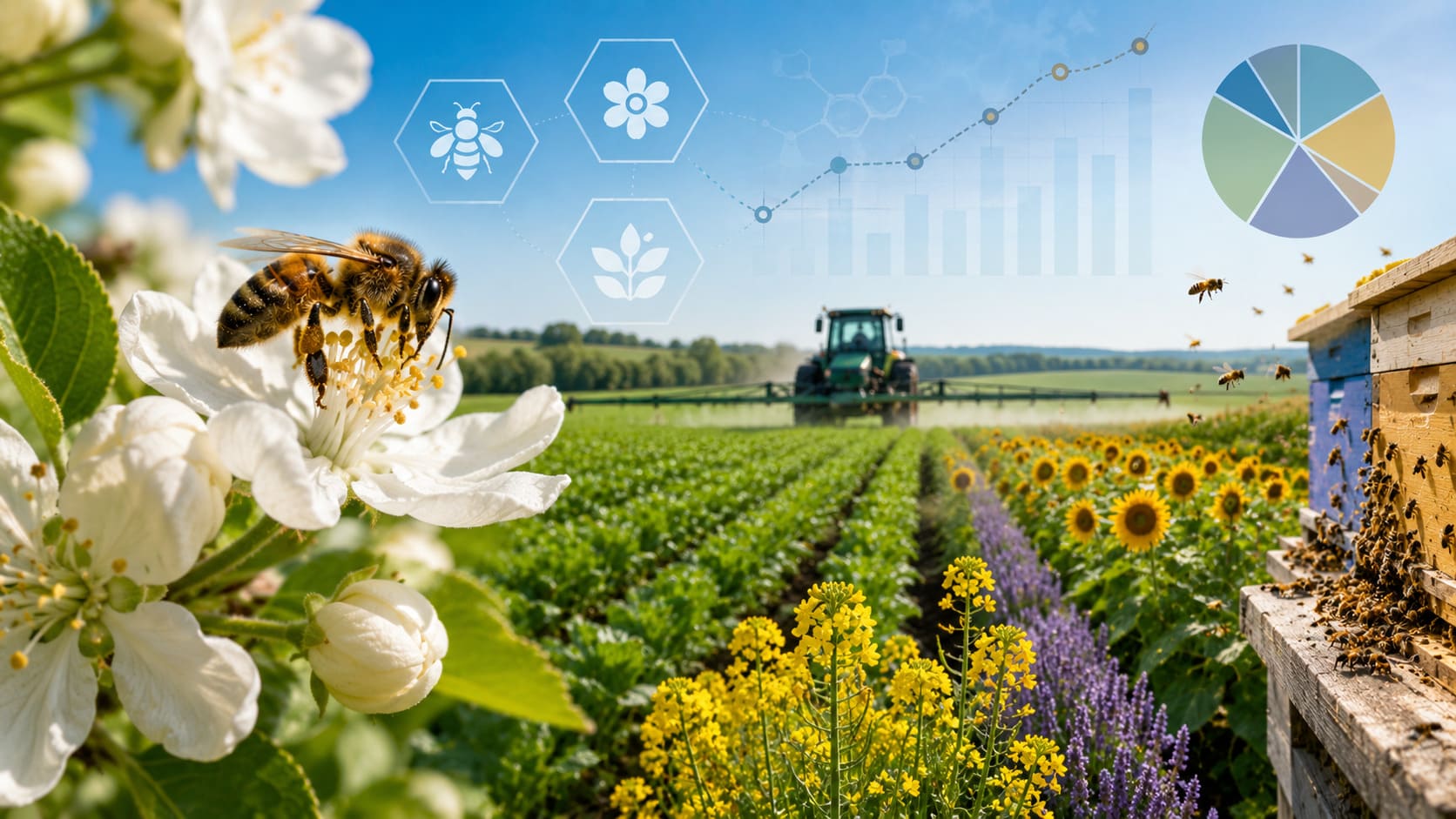
Almond orchards in California represent the largest single deployment of managed honey bees for crop pollination anywhere in the world.
Crop pollination is the deliberate application of pollinator biology to agricultural production — the intentional placement of bee colonies at the right place, at the right time, in the right numbers to ensure that flowering crops set adequate fruit and seed yields. It is simultaneously one of the most important and most underappreciated inputs in modern food production. This in-depth guide from Pollination Network covers the science behind crop pollination requirements, the commercial pollination industry, best practices for farmers and beekeepers, and the future of managed pollination in a changing world.
Why Crops Need Managed Pollination
In an ideal world, wild pollinator populations would be abundant and diverse enough to pollinate all agricultural crops without any intervention. In many parts of the world and for many low-intensity farming systems, this remains true. But the dramatic expansion of crop monocultures — single-species plantings covering hundreds or thousands of hectares — combined with the widespread decline of wild pollinators has created a fundamental mismatch between pollination supply and demand during critical bloom periods.
When an almond orchard in California’s Central Valley blooms over a three-week window in February, the demand for bee visits across a million acres of trees is so enormous that it could not possibly be met by wild pollinators even at their historic peak densities. The same logic applies to the apple and pear orchards of Washington State, the blueberry farms of Maine, the oil seed rape fields of Lincolnshire, and the melon greenhouses of southern Spain.
Crop Pollination Requirements by Species
Almonds: 100% Dependent on Bee Pollination
Almonds are the canonical example of a bee-dependent crop. Prunus dulcis is self-incompatible — a tree cannot pollinate itself and requires pollen from a different variety. Every almond kernel is the direct result of a bee visit transferring pollen between compatible varieties. California produces approximately 80% of the world’s almonds on roughly 1.4 million acres, requiring the annual import of approximately 1.8 to 2 million managed honey bee colonies — more than half of all managed colonies in the United States. The almond pollination season is the single largest and most economically significant pollination event in world agriculture.
Apples and Pears
Like almonds, most apple and pear varieties are self-incompatible and require cross-pollination between different varieties. Growers typically plant “polliniser” varieties (sometimes sterile crab apples) throughout their orchards and place honey bee colonies at a standard density of 1–2.5 hives per hectare during bloom. Timing is critical: placing hives too early depletes bees on competing dandelion flowers; placing them too late misses the narrow window of stigma receptivity.
Blueberries
Highbush blueberries (Vaccinium corymbosum) require “buzz pollination” — the rapid vibration of the flower to release pollen from poricidal anthers. While honey bees can perform this to a limited degree, bumblebees and native bees are far more efficient buzz pollinators of blueberries. Research consistently shows that blueberry yields are maximised by a combination of honey bee and native bee pollination rather than either alone.
Oilseed Rape / Canola
Oilseed rape (Brassica napus) is largely self-fertile but benefits significantly from bee visitation, which increases both the quantity and quality (oil content) of seed set by 15–25% depending on the study. The enormous acreages of rape grown in Northern Europe and North America represent a major spring forage resource for managed bee colonies, though the increasingly widespread use of neonicotinoid seed treatments on rape has been a major catalyst for the ongoing pesticide-pollinator policy debate.
Strawberries
Strawberry (Fragaria x ananassa) is self-fertile but produces malformed, commercially unmarketable fruit when pollination is inadequate. Regular bee visits ensure uniform fruit set across the entire receptacle surface. Studies in UK strawberry production have shown yield increases of 30–40% and significant improvements in fruit symmetry, firmness, and shelf life when bee pollination is well managed.
Cucurbits: Courgettes, Cucumbers, Melons, and Squash
The cucurbit family presents a distinctive pollination challenge: plants produce separate male and female flowers, and bees must transfer pollen between them. Female flowers that receive insufficient bee visits produce poorly formed or aborted fruit. Cucumber production in glasshouses often relies on specially managed, disease-free honey bee colonies or commercially reared bumblebee colonies to provide consistent pollination in an enclosed environment.
The Commercial Crop Pollination Industry
How Pollination Contracts Work
Commercial crop pollination is transacted through contracts between beekeepers (the service providers) and farmers (the clients). Key contract terms typically include:
- Hive density: the number of colonies per hectare or acre, specified for the crop and its specific pollination requirements.
- Hive strength: the minimum number of frames of bees, frames of brood, and food stores required to constitute a “full strength” pollination colony.
- Placement timeline: the specific dates by which hives must be placed and the duration of their presence.
- Hive placement guidelines: siting requirements for optimal distribution across the crop area, typically within 200–300 metres of all crop areas.
- Pesticide notification: farmer obligations to notify the beekeeper before any pesticide application.
- Fee structure: payment per colony or per hectare, often with a portion paid in advance and the remainder on completion.
Pricing of Pollination Services
Pollination service pricing varies enormously by crop, region, and market conditions. Almond pollination in California has at times exceeded $200 per colony per season. In European markets, apple and rapeseed pollination contracts typically range from €50 to €150 per colony. The price reflects not just the cost of maintaining healthy colonies but the transport costs, the opportunity cost of moving hives away from local honey forage, and — increasingly — the genuine scarcity of strong, healthy colonies in the face of Varroa-related colony losses.
The Role of Pollination Brokers
In large markets such as California and the US Pacific Northwest, pollination brokers play an intermediary role, aggregating supply from multiple beekeepers to fulfil the large-scale demands of commercial fruit and nut growers. Brokers maintain databases of available colonies, perform or commission pre-season hive strength assessments, and manage the logistical complexity of moving thousands of hives across hundreds of miles within tight seasonal windows.
Best Practices for Farmers Hiring Pollination Services
For farmers entering the pollination services market for the first time, the following principles maximise value and protect both crop yield and bee health:
- Source beekeepers early: demand for pollination services regularly exceeds supply in many regions; contracts should be established months before the bloom period.
- Specify hive strength: a weak hive with three frames of bees delivers a fraction of the pollination value of a strong colony with eight frames; strength specifications must be written into the contract with agreed inspection procedures.
- Communicate pesticide plans honestly: beekeeper and farmer are partners in this transaction; concealing planned pesticide applications destroys trust and potentially kills the colonies the farmer is paying to protect their crop.
- Provide supplementary forage habitat: wildflower strips adjacent to the crop give bees diversified nutrition and encourage them to work the crop margins more thoroughly.
- Assess results: track yield data across seasons and correlate with pollination provision — this data builds the evidence base for optimising future pollination management.
Best Practices for Beekeepers Providing Pollination Services
Providing successful pollination services demands more than simply placing hives in a field. Professional pollination beekeepers:
- Build up colonies to maximum strength in the weeks before the pollination contract begins, using splits, queen introduction, and supplementary feeding if necessary.
- Conduct thorough Varroa management treatments timed to produce the healthiest possible forager population at bloom time.
- Inspect and grade colonies immediately before delivery to ensure they meet contracted strength specifications.
- Position hives on the leeward side of shelterbelts where possible, with entrances facing east or south for optimal morning flight activity.
- Monitor hive conditions during the contract period and communicate proactively with the farmer about any health concerns.
- Negotiate pesticide use agreements before signing contracts and establish clear liability provisions in the event of pesticide-related losses.
The Future of Crop Pollination
The global demand for crop pollination services is projected to grow substantially over the coming decades as human populations increase and dietary preferences shift toward pollinator-dependent fruits, nuts, and vegetables. This trajectory creates both challenges and opportunities:
Technology
Electronic hive monitoring systems now allow real-time remote assessment of colony weight, temperature, humidity, and sound profile — enabling beekeepers to manage pollination contracts across geographically dispersed apiaries with far greater efficiency. Autonomous robotic pollinators have been developed experimentally, but they remain orders of magnitude less efficient than real bees and cannot replicate the adaptive foraging behaviour that makes bees so effective.
Wild Pollinator Restoration
The most resilient long-term solution to pollination security lies in restoring wild pollinator populations alongside maintaining healthy managed honey bee colonies. This requires landscape-scale habitat restoration — a challenge that transcends individual farm boundaries and demands coordinated action among farmers, land managers, government agencies, and conservation organisations. The agricultural policy landscape is slowly beginning to respond.
Diversifying Managed Pollinators
Beyond honey bees, commercial rearing of bumblebees, mason bees, alfalfa leafcutter bees, and blue orchard bees is expanding to meet niche pollination needs. Each species has distinct strengths: bumblebees for tomatoes and blueberries; mason bees for early-season stone fruit; leafcutter bees for alfalfa seed production. A future pollination industry that successfully manages multiple species will be more resilient and versatile than one that relies on honey bees alone.