
Urban Beekeeping: How City Hives Are Transforming Communities and Ecosystems
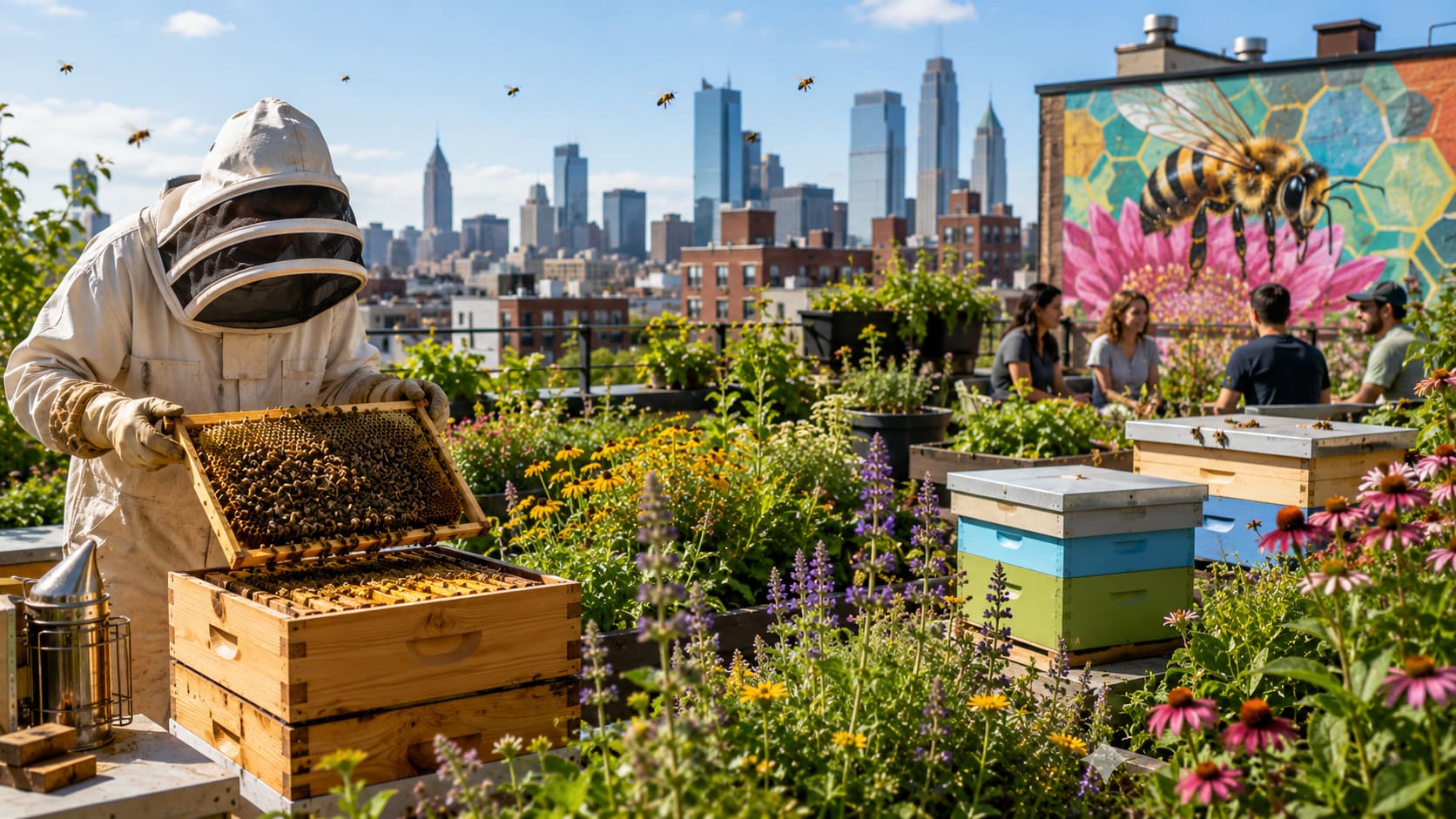
Rooftop beekeeping is transforming urban landscapes into productive pollinator habitats across cities worldwide.
Over the past decade, urban beekeeping has transformed from a niche curiosity into a mainstream movement reshaping city rooftops, community gardens, school grounds, and corporate campuses worldwide. From Paris — where hives sit atop the Opéra Garnier and Notre-Dame Cathedral — to New York, London, Tokyo, Melbourne, and Kyiv, city-dwellers are discovering that keeping honey bees in urban environments is not only possible but often extraordinarily rewarding. This guide from Pollination Network explores the practice, the challenges, the remarkable benefits, and the responsible approaches that make urban apiculture a genuinely positive force for cities and their ecosystems.
Why Cities Are Surprisingly Good for Bees
The idea that cities might be better habitats for honey bees than intensively farmed countryside might seem counterintuitive. Yet the evidence increasingly supports this conclusion. Studies from London, Paris, Berlin, and several North American cities have consistently found that urban honey bee colonies tend to produce more honey, show lower Varroa mite infestation levels, and exhibit stronger winter survival rates than their rural counterparts in heavily agricultural landscapes. The reasons are instructive:
- Year-round forage diversity: cities contain an extraordinary mosaic of flowering plants — parks, gardens, allotments, street trees, green roofs, window boxes — that bloom in succession from late winter through late autumn. This temporal diversity provides consistent nutrition that single-crop agricultural landscapes cannot match.
- Reduced pesticide exposure: while urban environments are not pesticide-free, the concentrated use of systemic agricultural insecticides is largely absent. The pesticide landscape of a city garden is fragmented, low-dose, and far less systematically toxic than the blanket field treatments applied to arable crops.
- Heat island effects: urban heat islands extend the active season for both plants and bees, allowing colonies to forage for more days per year than equivalent colonies in rural locations at the same latitude.
- Lower inter-colony disease transmission risk: urban apiaries are typically small (1–5 hives) and well separated from other urban hives, reducing some disease transmission pathways common in large rural apiaries.
Urban Honey: A Terroir Product
Urban honey has emerged as a genuinely distinctive gourmet product. The hyperdiverse forage of a city creates honeys with complex, multi-floral flavour profiles that reflect the specific botanical character of their neighbourhood — the lindens of a Parisian boulevard, the blackberries of a London railway cutting, the goldenrod of a Brooklyn community garden. Chefs, restaurants, and artisan food markets increasingly prize urban honey for its provenance and character. Several European cities now have active urban honey markets and annual competitions.
The connection between urban honey flavour and local pollination ecology is a powerful educational tool. Tasting a honey harvested from rooftop hives above a city hospital garden tells a story about the plants growing in that neighbourhood, the bees’ foraging patterns, and the broader ecological health of the urban landscape.
Regulations and Legal Considerations
Urban beekeeping is regulated to varying degrees in different cities and countries. Before establishing urban hives, prospective beekeepers must research and comply with local bylaws, which may address:
- Minimum distances from property boundaries, neighbouring dwellings, and public spaces
- Maximum number of hives permitted per property
- Registration requirements with local authority or national bee disease inspection services
- Requirements for physical barriers (flyways — tall hedges or fences that direct bees to fly at height above neighbouring spaces)
- Landlord consent for rooftop or rented property installations
- Building permit requirements for permanent rooftop structures
In many jurisdictions, beekeeping associations operate voluntary registration schemes that provide access to mentorship, disease inspection services, and insurance — all of which are strongly recommended for urban beekeepers. Visit our beekeeping guide for more on getting started.
Choosing the Right Location in the City
Site selection is critical in urban beekeeping. The ideal urban apiary location shares several characteristics:
Access to Forage
Urban bees can forage up to 3–5 km from their hive. A hive placed in a dense city centre with numerous parks, gardens, and street trees will have access to a rich and diverse forage landscape. Mapping the flowering calendar of nearby parks and green spaces before establishing hives helps predict seasonal honey flows and potential dearth periods.
Flight Path Management
Bees should not be placed where their flight paths routinely cross areas of high pedestrian activity. Rooftop locations — typically 2–10 metres above ground level — are ideal because bees naturally fly high when leaving the hive, passing well above human head height. Ground-level hives should be screened behind a 2-metre barrier to force bees upward at the point of exit.
Water Sources
Urban bees need accessible, clean water within 500 metres of the hive. Without a managed water source, they will find their own — which may mean a neighbour’s birdbath, a dripping pipe, or a swimming pool. Providing a purpose-built water source (a shallow dish with floating corks for landing) prevents these nuisance visits.
Community Engagement: Bees as Social Infrastructure
Some of the most compelling arguments for urban beekeeping are social rather than ecological. Community beekeeping projects in urban schools, community gardens, housing estates, and faith community spaces have demonstrated significant benefits for social cohesion, educational engagement, mental health, and community pride. Beekeeping requires a form of sustained, careful attention to living systems that many urban residents rarely experience. The shared language of colony health, seasonal rhythms, and hive management creates genuine community around the apiary.
Corporate sustainability programmes have also embraced urban beekeeping as a tangible, communications-friendly environmental initiative. Hotel rooftop hives, office garden apiaries, and brewery beekeeping partnerships have proliferated. At their best, these programmes extend beyond marketing to genuine engagement with pollinator conservation — funding habitat creation, supporting local beekeeping associations, and monitoring urban pollinator diversity.
Challenges Specific to Urban Beekeeping
Overpopulation of Hives
The popularity of urban beekeeping has led, in some cities, to genuine concerns about the density of managed honey bee colonies competing with wild urban pollinators for limited floral resources. Studies in London and Paris have found evidence of competition between high-density urban honey bee populations and wild bumblebee and solitary bee communities in pollen-limited areas. Responsible urban beekeeping must include active support for wild pollinator habitat alongside hive management.
Swarm Management
Swarming — the colony’s natural reproductive behaviour — presents particular challenges in urban environments where a cluster of 10,000 bees on a park bench or shop awning will inevitably alarm the public. Urban beekeepers must be especially diligent about swarm prevention through regular inspections and proactive queen management during spring. Most urban beekeeping associations maintain swarm collection teams available at short notice.
Theft and Vandalism
Urban hives are unfortunately vulnerable to theft and vandalism in ways that rural apiaries typically are not. Secure, lockable hive designs and discretely located apiaries reduce this risk. Hive registration and marking with the owner’s contact details is both a best practice and a legal requirement in some jurisdictions.
Urban Beekeeping as Gateway to Food Systems Awareness
Perhaps the most profound impact of urban beekeeping is its educational power. Urban honey bees connect city residents to the fundamental processes of food production — pollination, seasons, ecological dependencies — in a direct, experiential way that no classroom or documentary can replicate. A child who has watched bees returning laden with pollen from a community garden has begun to understand the invisible infrastructure that underlies the fruit bowl on their kitchen table.